Healthcare Center
A center/office is typically a physical location that provides a set of healthcare related services. For example, a small healthcare center in a remote area that may provide basic telemedicine services, emergency medical services and a mobile health clinic to the nearby populations. A larger healthcare center may provide additional services such as electronic health records and health analytics. An even larger health center may in fact be a small hospital with overnight patient care.
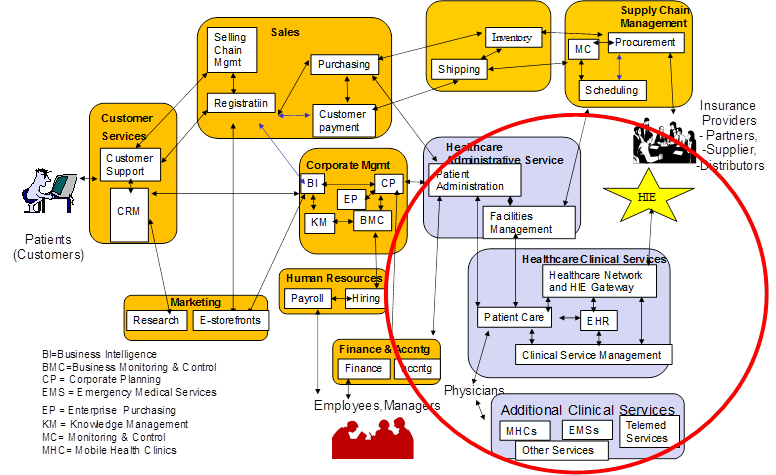
Figure 1 shows a high level organizational view of a healthcare center that can be specialized and simplified for smaller centers. This diagram is a business pattern that captures the healthcare specific processes/services such as healthcare administration and healthcare clinical services (e.g., patient care). Although the main focus of healthcare center is on healthcare related services, show in the red circle, Figure1 also captures the general administrative processes such as customer services, sales, marketing, finance and accounting, and corporate management. In addition, the operational processes of warehousing and supply chains for medicines, medical equipment, and patient comfort (e.g., beds) are included in this healthcare pattern.
Figure 1: Business Pattern for a Healthcare Center
This pattern can be refined to show where we allocate different processes into different organizational units and the topology of the enterprise. For example, three different buildings could house the healthcare processes, the general administrative processes, and the operational processes. In addition, different types of technologies may be used at different sites and the sites may be interconnected through various network topologies.
Figure2 shows a Portal view of a Healthcare Center that provides the following services:
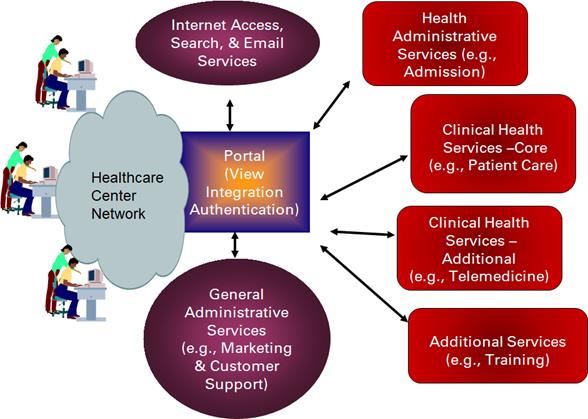
Figure 2: Portal View of a Healthcare Center