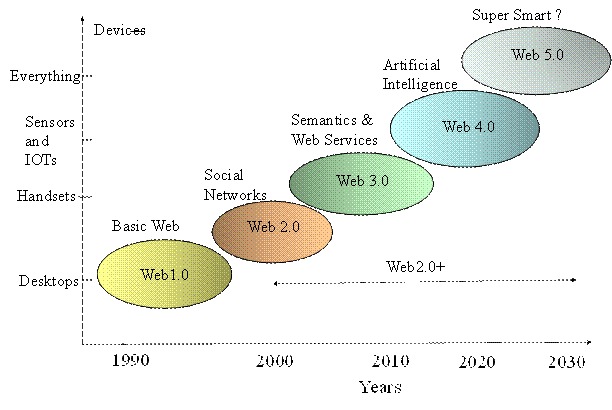
Web technologies have been playing a key role in agriculture since the late 1990s. In this time period, Web has evolved from the classical web, termed Web 1.0, that primarily exchanged documents to a more collaborative platform, known as Web 2.0 that includes social networks and then Semantic Web (Web 3.0) that includes AI (artificial intelligence) and natural language processing features into the Web. Figure1 shows this evolution as it is expected to grow in the next few decades. This evolution captures only significant features of each generation and the type of target devices. Collectively, these developments are resulting in powerful platforms for the next generation of e-agriculture applications.
It should be acknowledged that many practitioners and researchers do not recognize the idea of Web2.0, Web3.0, etc. They consider it all to be a continuation of web technologies since 1992, without any discrete generations. However, most practitioners have settled with the idea of Web1.0 and Web2.0+ -- as displayed in this figure.
Figure 1: Evolution of Web Technologies
Figure2 shows portal view of an eAgriculture Center that can be customized for smaller or larger populations. As we will see, the services provided by this center will be heavily strengthened by the evolving Web2.0+ technologies. For example, we will refer to Figure2 Portal as eAgriculture2.0+, because Enterprise 2.0+ refers to enterprises that rely heavily on Web 2.0 and later models. Basically Enterprise 2.0, as coined by McAfee (see Exhibit1), shifts the focus of Web 2.0 from user communities and social networks to enterprises.
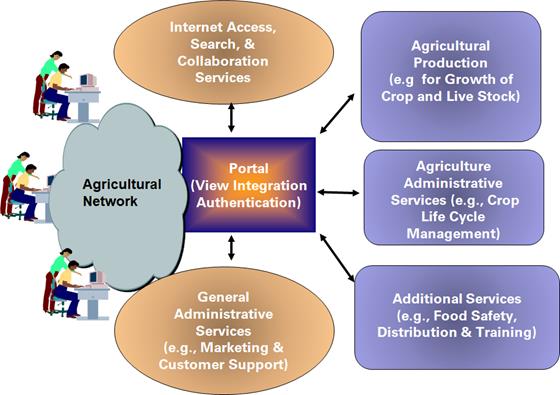
Figure2: Enterprise Portal for eAgriculture2.0+ – Web Technologies are used in all Building Blocks of eAgriculture
|
Exhibit1: Example of eAgriculture2.0+
Enterprise 2.0, according to an interesting article by McAfee [2006], refers to enterprises that rely heavily on Web 2.0 models. A “new” wave of business communication tools including blogs, wikis and group messaging software was introduced in enterprises around 2005 for more spontaneous, knowledge-based collaboration between enterprise units and employees. These tools supplant other communication and knowledge management systems in an enterprise. For agriculture, the main idea is to use the Web 2.0+ capabilities to capture tacit knowledge, best practices and relevant experiences throughout an agriculture firm and then make them readily available to more users within outside an organization.. McAfee introduced a paradigm called SLATES that consists of: § Search: being able to search the Intranet as easily as the Internet § Links: best web pages are invoked more frequently § Authoring: anyone can write by using Blogs, Wikis, etc § Tags: XML type tags to categorize things (folksonomy instead of taxonomy) § Extensions: interlinking tags (if you like this book, you should like these) § Signals. Alerts, events and headlines (RSS feeds with headlines)
The main result is that highly productive and highly collaborative work environments by making both the practices of knowledge work and its outputs become more visible. The following ground rules for Enterprise 2.0 are suggested by [McAfee 2006] for implementing the new technologies (these can be all used in eAgriculture): § It is necessary to create a receptive culture in order to prepare the way for new practices. § A common platform must be created to allow for a collaboration infrastructure. § An informal rollout of the technologies may be preferred to a more formal procedural change. § Managerial support and leadership is crucial (true for most any culture change or shift, of course). Enterprise 2.0 raises several new challenges, such as the following: § Even when implanted and implemented well, these new technologies will certainly bring with them new challenges. § These tools may well reduce management’s ability to exert unilateral control and to express some level of negativity. § Whether a company’s leaders really want this to happen and will be able to resist the temptation to silence dissent is an open question. (This point, and the one above, represent decentralization of control of web content and interaction whether the corporate structure wants it or not). § Leaders will have to play a delicate role if they want Enterprise 2.0 technologies to succeed.
Source: McAfee, A., “Enterprise 2.0: The Dawn of Emergent Collaboration”, MIT Sloan Management Review, Vol. 47, No. 3, Spring 2006, pp. 21-28
|