Physician Support and Healthcare Networks (HCNs)
Physicians provide clinical services to a wide range of patients, planned and unplanned. While delivering clinical services to patients, the physicians rely on hospital laboratories, hospital pharmacies, hospital radiology departments, healthcare networks, clinics, and independent labs, among others. Thus a great deal of information exchange and collaboration takes place in the modern healthcare settings.
In many cases, the needs of a patient require the inclusion of many providers in the program of care. Extra effort is needed to minimize the gaps in service and possible conflicts between providers. New concepts such as "managed care," "preferred provider" and "gatekeeper physician" are used as means of coordinating patient care and improving its quality. In addition, efforts to control healthcare costs are crucial to healthcare providers.
In this climate of coordinated and collaborative healthcare, information technology (IT) is playing a pivotal role in electronic medical records transfer. In addition, mobile applications support physicians as they move from patient to patient.
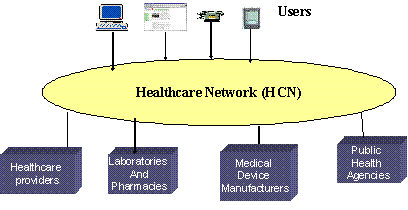
Healthcare Networks (HCNs) are becoming important because they enable the exchange of healthcare messages and documents and support electronic collaboration among healthcare entities. As shown in the figure, the participants in HCNs include healthcare providers (hospitals, clinics, physicians, public health providers, specialists), public health agencies (local, regional and national), patients, payers (government or private insurers), medical laboratories, pharmacies, pharmaceutical and medical device manufacturers, and researchers.
Common Automation Strategy:
Healthcare networks such as the
Main features and additional details:
· Physician system and healthcare network requirements
Related business processes: