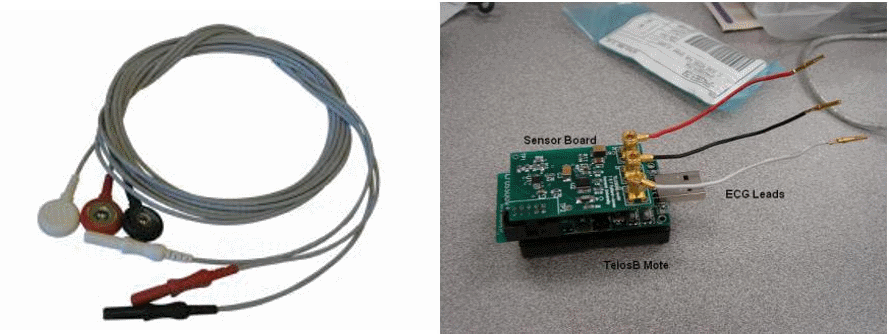
Figure-1
Telecardiology is the process wherein a patient's electrical activity results such as ECG and other diagnostic results like Echocardiogram, Cardiac CT scan, Cardiac MRI scan, etc., can be transmitted and interpreted through telephone or over the internet, facilitating proper diagnosis. Modalities such as Echocardiogram, ECG, Cardiac CT, Cardiac MRI, Carotid Doppler, Stress Echocardiogram, Cardiac Nuclear Scans, Stress Test (TMT), Holter Monitor, Event Monitor, and Second
Opinion for Coronary Angiograms are included under Telecardiology services.
Telemedicine can play a huge role in care delivered by primary care physicians . One of the oldest known telecardiology systems for teletransmissions of ECGs was established in Gwalior, India. The ECG was converted to sound waves with a frequency varying from 500 Hz to 2500 Hz with 1500 Hz at baseline. This system was also used to monitor patients with pacemakers in remote areas. In Pakistan three pilot projects in telemedicine, initiated by the Ministry of IT & Telecom, were linked via the Pak Sat-I communications satellite, and four districts were linked with another hub. A 312 Kb link was also established with remote sites and 1 Mbit/s bandwidth was provided at each hub. These remote sites were
connected and on average of 1,500 patients being treated per month per hub.
The Telecardiology Framework:
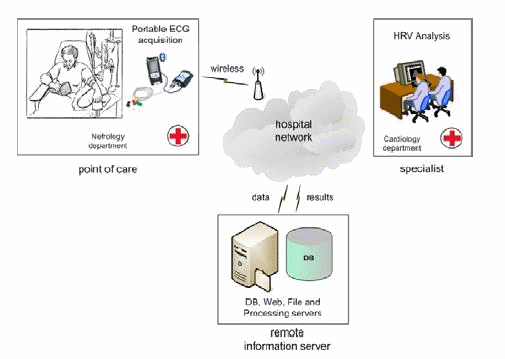
The telemedicine framework consists of three participant sites (see Fig.) including the physician at the point-of-care, the specialized cardiologist and the remote information server. At the point of care, a physician acquires the ECG and other relevant information during the clinical intervention using a mobile device and sends it to the information server. Then the information is processed and a results report is automatically produced and stored on the server. Finally, the specialist connects to the information server and gets the results to be analyzed and used in the patient diagnosis.