• Health DSS assists clinicians at the point of care. This means that a clinician would interact with a DSS to help determine diagnosis, analysis, etc. of patient data.
• Good HDSS Services provide:
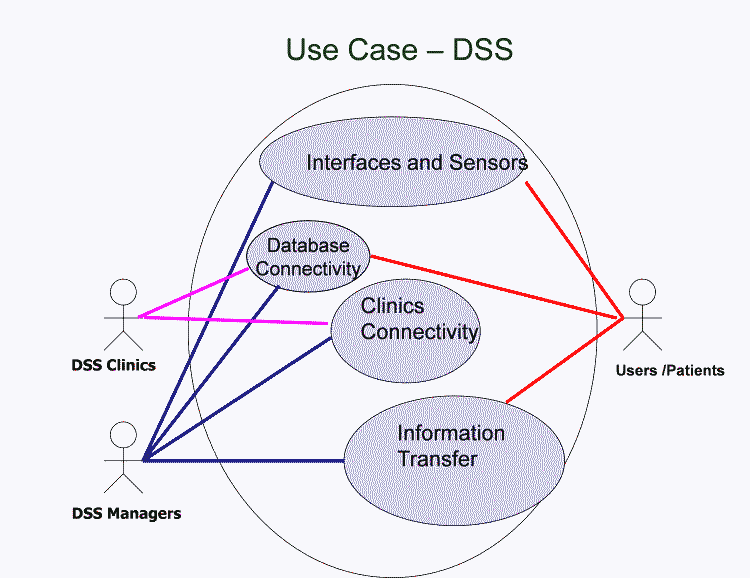
– Interfaces and sensors for monitoring several things.
– Correct Data Access: When a patient checks into an outpatient clinic, the clinic’s EHR sends relevant patient data to the DSS
– Connectivity with Clinics: The DSS receives back the patient’s care needs (e.g., overdue preventive care procedures, medication incompatibilities)
– Information Transfer: The DSS informs the clinician regarding those care needs.
• The following information models represent different aspects of a general DSS system. These models, represented in UML (Unified Modeling Language), can be customized and extended if needed.
– Use Cases: capture the activities performed by the system and the key players. These correspond to the Functional Requirements
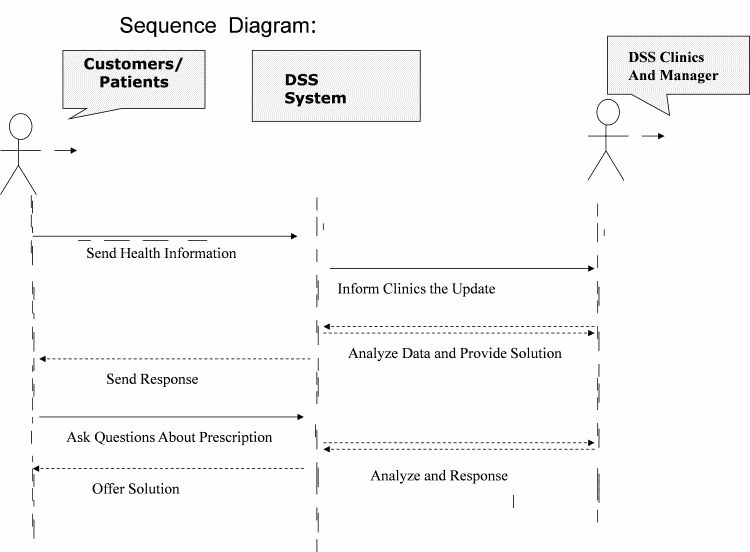
– System Sequence Diagram (SSD): Refinement of Use cases. Shows the sequence of activities/messages between the players
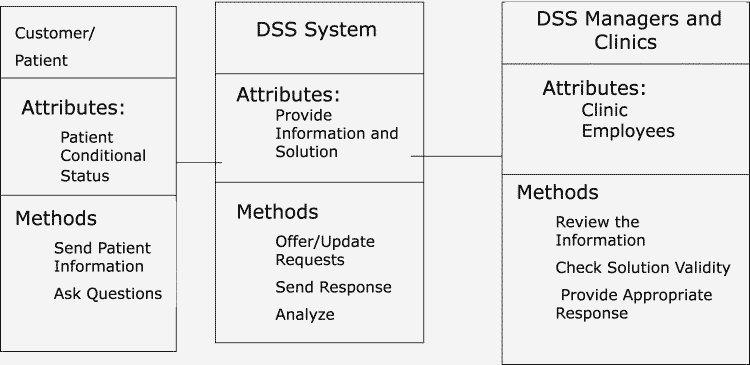
– Class Diagram: Shows the key objects in the system and their properties (attributes and methods)