Good Disaster Management Portals systems provide
• A Dispatch Subsystem that serves as the central nerve center of the DM portal
• Communication capabilities through wired and wireless networks with intelligent sensors
• Essential services such as hospital, police, fire, towing and others
• Guidance services such as environmental (weather) data, traffic information, and geospatial information services (GIS)
• Decision support services that include query and data analytics, business Intelligence, and a data warehouse
• Generate reports for management, handle problems and Q&A
The following information models (IMS) represent different aspects of a Disaster Management Portal:
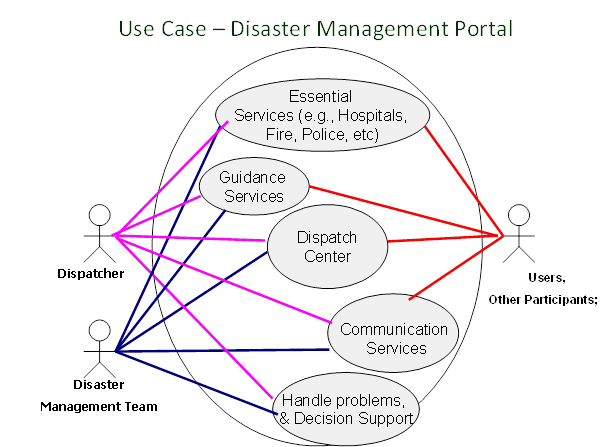
• Use Cases: capture the activities performed by the system and the key players. These correspond to the Functional Requirements
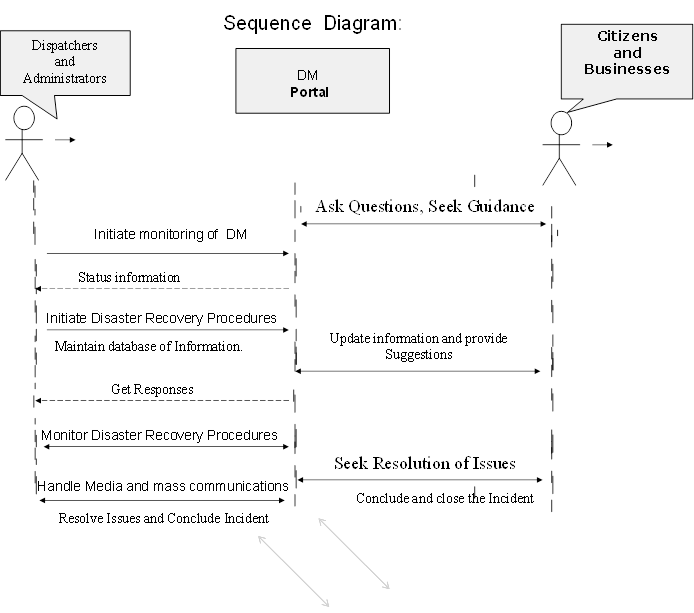
• System Sequence Diagram (SSD): Refinement of Use cases. Shows the sequence of activities/messages between the players
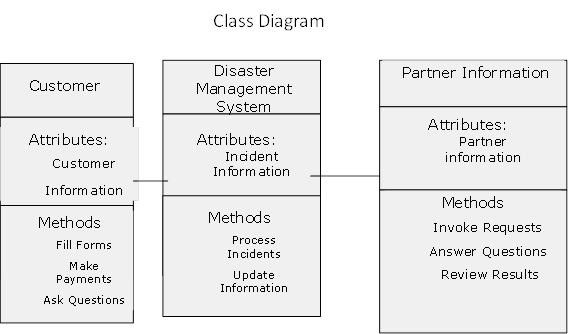
• Class Diagram: Shows the key objects in the system and their properties (attributes and methods)
Note: These models (diagrams) represent the best practices in systems analysis and design and are intended as sketches (patterns) to get started quickly. These models are represented in UML (Unified Modeling Language). You (or a systems analyst) should refine, customize, and expand these patterns based on specific needs.