|
An E- learning support system should support the following:
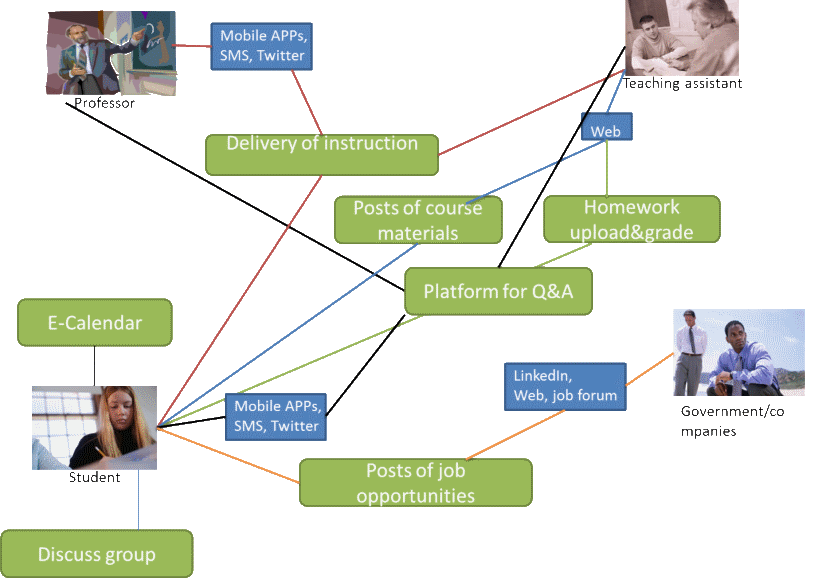
The information model (Figure 1) represents high level view of E-learning supporting service.
-
E-learning is a new learning model. E-learning platforms should create an adaptable, personalized platform for learners, and provide effective learning support services to maintain learner’s motivation.
-
Good E-Learning Systems provide:
-
The following information models represent different aspects of a general E-Learning. These models, represented in UML (Unified Modeling Language), can be customized and extended if needed.
-
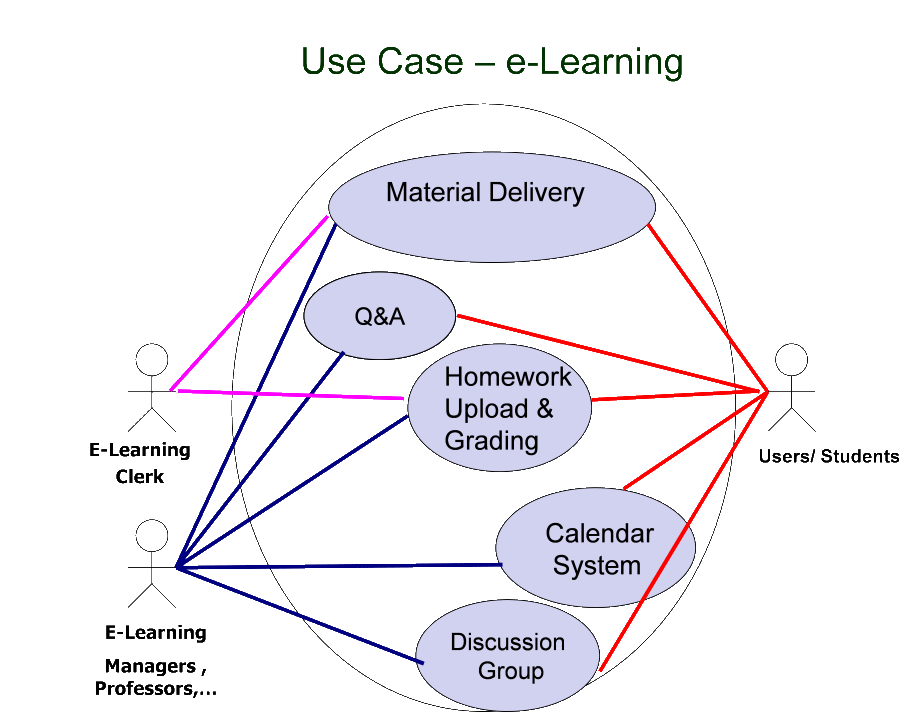
Use Cases: capture the activities performed by the system and the key players. These correspond to the Functional Requirements
-
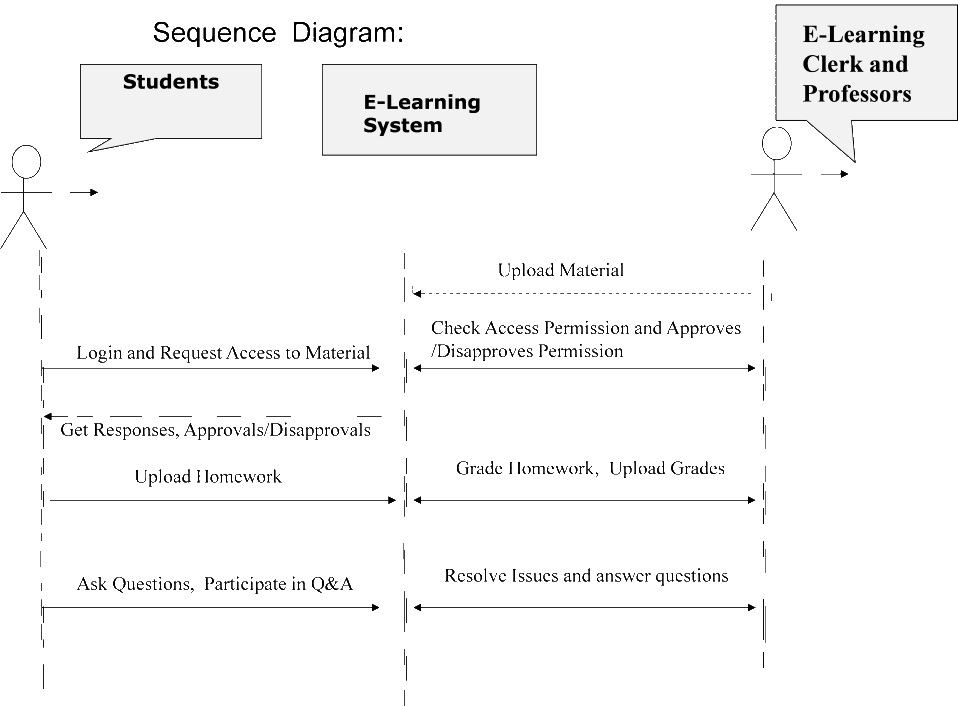
System Sequence Diagram (SSD): Refinement of Use cases. Shows the sequence of activities/messages between the players
-
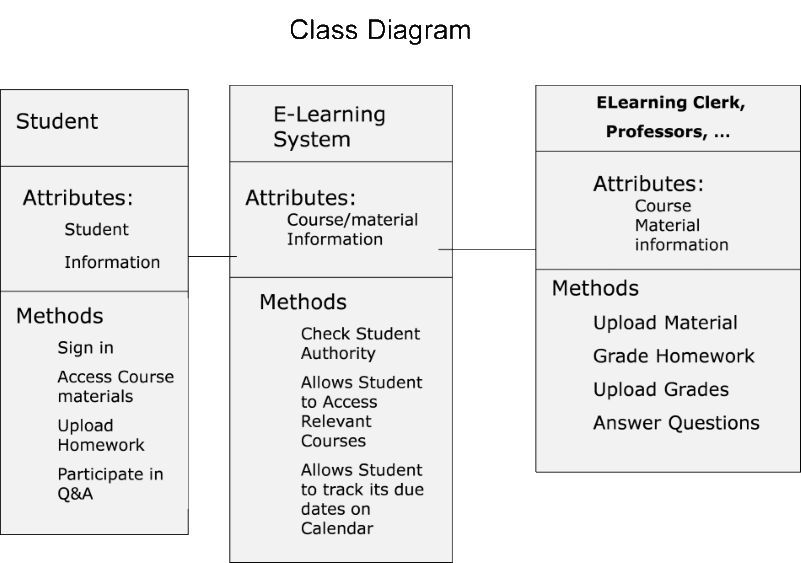
Class Diagram: Shows the key objects in the system and their properties (attributes and methods)
|